KAROD- CHEMI SYSTEM
Decontamination Technology: A process that removes radioactive oxide layers from the metal components of nuclear power plants by treating them with specialized decontamination agents to dissolve the metallic oxide films.
“A Tribute to Frederick Soddy - GMC929”
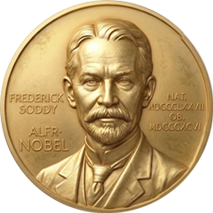
"Frederick Soddy – An English chemist awarded the 1921 Nobel Prize in
Chemistry for his work on radioactive decay, the transmutation of elements,
and establishing the concept of isotopes."
Conventional Technology
| Features |
- Limitations of Conventional Redox Decontamination: Generates a large volume of secondary waste during the of parts.
- Generates a large volume of secondary waste during the decontamination of contaminated parts.
- High corrosiveness to materials and components due to the use of strong acids.
- Complex and multi-staged decontamination processes.
|
| Content |
- Current Process Limitations: Oxidizing agents used to dissolve
- Oxidizing agents used to dissolve poorly soluble chromium oxides result in low decontamination efficiency.
- Inorganic acid reducing agents are used for oxide film removal, causing potential base metal damage.
- Organic acids are employed for removal via ion-exchange resins, leading to high secondary waste volume.
|
Nucleartech Decontaminant Solution
| Features |
Content |
- Process Innovation & Material Safety: Simplification of the decontamination process via the immersion method.
- Zero corrosiveness to components due to the mild alkaline properties of the agent.
- Streamlined in-situ decontamination through the integration of ultrasonic modules.
|
- Environmental Efficiency & Cost Leadership: Complete Decontamination: Achieves total removal of radioactive isotopes, including Cesium-137.
- Drastic Waste Reduction: Eliminates the need for additional neutralization, significantly reducing secondary waste generation.
- Solution Recyclability: Decontamination agents can be reused after the process, maximizing resource efficiency.
-
Cost Competitiveness:
- -Process Optimization: No ion-exchange resin purification required.
- -Price Advantage: Approximately one-third the cost of imported products.
|